platform_ad9361_spi HDL Subdevice Worker
HDL subdevice worker that provides an SPI state machine for communication with the AD9361 device.
Detail
The AD9361 SPI HDL subdevice worker implements a serial peripheral
interface (SPI) state machine for communication with
the AD9361 integrated circuit (IC).
The AD9361 SPI HDL subdevice worker is intended for use in platforms and cards
with an SPI bus that addresses only the AD9361. Properties are defined
as <ComponentSpec> properties within
the worker’s OpenCPI Worker Description (OWD); they are not defined
in a separate OpenCPI Component Specification (OCS). SPI read/writes are
actuated by the rprops RawProperty port. A DevSignal is also sent which
can force the AD9361 RESETB pin, which is active-low, to logic 0.
A block diagram representation of the implementation is given in Figure 226:
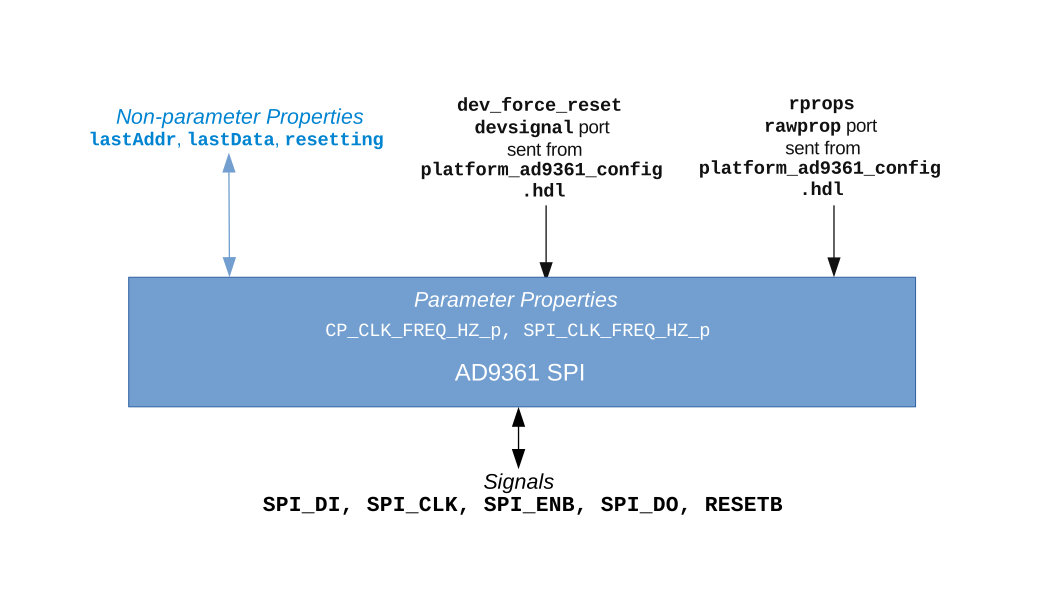
Figure 226: AD9361 SPI HDL Subdevice Worker Block Diagram
Worker Properties
CP_CLK_FREQ_HZ_pType:
floatAccess:
Parameter:
TrueWritable:
FalseInitial:
FalseVolatile:
FalseRead back:
False
Default value:
None
SPI_CLK_FREQ_HZ_pType:
floatAccess:
Parameter:
TrueWritable:
FalseInitial:
FalseVolatile:
FalseRead back:
False
Default value:
None
lastAddrType:
ushortAccess:
Parameter:
FalseWritable:
FalseInitial:
FalseVolatile:
TrueRead back:
False
Default value:
None
lastDataType:
ucharAccess:
Parameter:
FalseWritable:
FalseInitial:
FalseVolatile:
TrueRead back:
False
Default value:
None
resettingType:
boolAccess:
Parameter:
FalseWritable:
FalseInitial:
FalseVolatile:
TrueRead back:
False
Default value:
None
Worker Ports
dev_force_reset: Forces theRESETBpin, which is active low, to logic 0.Type:
devsignal
rprops: Actuates SPI reads and writes to the AD9361 device.Type:
rawprop
Supported device worker:
platform_ad9361_configConnections:
Subdevice port:
rawpropsSupported worker port:
rpropsIndex:
None
Subdevice port:
dev_force_spi_resetSupported worker port:
dev_force_resetIndex:
None
Interfaces (other than data I/O ports):
Subdevice Connections:
Worker Signals
force_resetDirection:
outDifferential:
falsePin:
false
SPI_DIDirection:
outDifferential:
falsePin:
false
SPI_CLKDirection:
outDifferential:
falsePin:
false
SPI_ENBDirection:
outDifferential:
falsePin:
false
SPI_DODirection:
inDifferential:
falsePin:
false
RESETBDirection:
outDifferential:
falsePin:
false
Worker Configuration Parameters
Resource utilization for this worker for the
zynqtarget platform, configuration 0:Configuration: 0
Tool: Vivado
Version: 2017.1
Device: xc72020clg484-1
Registers (Typ): 67
LUTS (Typ): 94
Fmax(MHz) (Typ): 235
Resource utilization for this worker for the
zynqtarget platform, configuration 1:Configuration: 1
Tool: Vivado
Version: 2017.1
Device: xc72020clg484-1
Registers (Typ): 68
LUTS (Typ): 101
Fmax(MHz) (Typ): 315
Resource utilization for this worker for the
stratixtarget platform, configuration 0:Configuration: 1
Tool: Quartus
Version: 17.1.0
Device: EP4SGX230KF40C2
Registers (Typ): 70
LUTS (Typ): 139
Fmax(MHz) (Typ): N/A
Resource utilization for this worker for the
stratixtarget platform, configuration 1:Configuration: 1
Tool: Quartus
Version: 17.1.0
Device: EP4SGX230KF40C2
Registers (Typ): 71
LUTS (Typ): 141
Fmax(MHz) (Typ): N/A
Resource utilization for this worker for the
virtex6target platform, configuration 0:Configuration: 0
Tool: ISE
Version: 14.7
Device: 6v1x240tff1 156-1
Registers (Typ): 65
LUTS (Typ): 130
Fmax(MHz) (Typ): 437.445
Resource utilization for this worker for the
virtex6target platform, configuration 1:Configuration: 1
Tool: ISE
Version: 14.7
Device: 6v1x240tff1 156-1
Registers (Typ): 65
LUTS (Typ): 134
Fmax(MHz) (Typ): 412.712
Fmax refers to the maximum allowable clock rate for any registered signal paths within a given clock domain
for an FPGA design. Fmax is specific only to this worker and represents the maximum
possible Fmax for any OpenCPI bitstream built with this worker included.
Note that the Fmax value for a given clock domain for the final bitstream is often worse
than the Fmax specific to this worker, even if this worker is the only one included in the bitstream.
Note that the Fmax measurements given for the zynq target are the result of a Vivado timing analysis
that is different from the Vivado analysis performed by default for OpenCPI worker builds. See
the section “Vivado timing analysis” for details.
Control Timing and Signals
The AD9361 SPI HDL subdevice worker operates entirely in the control plane clock domain. All SPI data and SPI clock signals are generated in the control plane clock domain. Note that SPI clock can only be a divided version of the control plane clock.
Vivado Timing Analysis
The Vivado timing report that OpenCPI runs for HDL device workers may erroneously report
a max delay for a clocking path which should have been ignored. Custom Vivado tcl commands
had to be run for this HDL subdevice worker to extract pertinent information from Vivado timing analysis.
After building the worker, the following commands were run from the assets project directory
(after the Vivado settings64.sh was sourced):
cd hdl/devices/
vivado -mode tcl
Then the following commands were run inside the Vivado tcl terminal for the
parameter property set:
CP_CLK_FREQ_HZ_p=100e6
SPI_CLK_FREQ_HZp=6.25e6
open_project ad9361_spi.hdl/target-zynq/ad9361_spi_rv.xpr
synth_design -part xc7z020clg484-1 -top ad9361_spi_rv -mode out_of_context
create_clock -name clk1 -period 0.001 [get_nets {ctl_in[Clk]}]
report_timing -delay_type min_max -sort_by slack -input_pins -group clk1
The Fmax for the control plane clock for this worker is computed as the maximum magnitude slack with a control plane clock of 1 ps plus 2 times the assumed 1 ps control plane clock period (4.244 ns + 0.002 ns = 4.244 ns, 1/4.244 ns = 235.52 MHz).
Then the following commands were run inside the Vivado tcl terminal for the parameter property set:
CP_CLK_FREQ_HZ_p=125e6
SPI_CLK_FREQ_HZp=6.25e6
open_project ad9361_spi.hdl/target-zynq/ad9361_spi_rv.xpr
synth_design -part xc7z020clg484-1 -top ad9361_spi_rv -mode out_of_context
create_clock -name clk1 -period 0.001 [get_nets {ctl_in[Clk]}]
report_timing -delay_type min_max -sort_by slack -input_pins -group clk1
The Fmax for the control plane clock for this worker is computed as the maximum magnitude slack with a control plane clock of 1 ps plus 2 times the assumed 1 ps control plane clock period (3.169 ns + 0.002 ns = 3.171 ns, 1/3.171 ns = 315.36 MHz).